Missouri Supreme Court must protect the people’s power of referendum

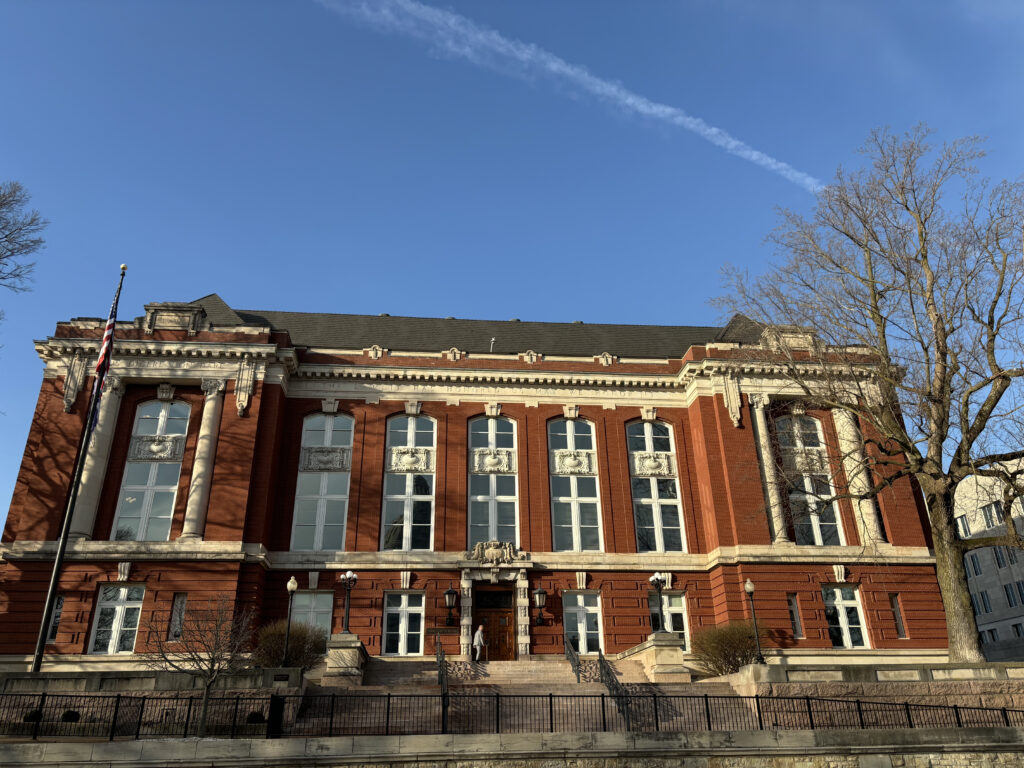
The Missouri Supreme Court Building in Jefferson City on March 12, 2025 (Clara Bates/Missouri Independent).
An accountable state government is like a seesaw: government on one side, people on the other. When it works, it moves in a steady rhythm — government acts, people respond. But when one side grows too heavy, the system stops working. The people can push, organize, and speak out, but the balance no longer shifts. That is when accountability breaks.
Missouri now stands at one of those moments.
For more than a century, Missouri courts have recognized a simple but foundational principle: the people reserve the power to legislate directly through referendum. This right is not symbolic. It is explicit in our Constitution and essential to maintaining balance between citizens and government.
That is why the upcoming May 12 Missouri Supreme Court hearing in Maggard v. State of Missouri carries such weight for the future of direct democracy in our state.
More than 300,000 Missourians have acted. They signed petitions to challenge the congressional redistricting map passed during the 2025 special session — and followed the rules. In doing so, they exercised a right that has long served as a democratic safeguard in our state.
Under Missouri’s Constitution, that action should have a clear effect: the law in question is suspended until voters can decide its fate.
Yet, state officials have argued otherwise, raising troubling questions about whether Missourians can meaningfully enforce their own constitutional rights. If citizens who follow every requirement still lack standing to defend the referendum process, then the right itself risks becoming unenforceable in practice.
At the same time, recent legal battles over ballot language underscore another critical piece of this system: voters must have access to fair, accurate, and unbiased information. A Cole County judge recently struck misleading language related to the referendum, reinforcing a basic democratic principle: voters deserve clarity, not confusion, when making decisions at the ballot box.
These issues are deeply connected.
Fair maps, fair ballot language, and a functioning referendum process all serve the same purpose, ensuring that elected officials remain accountable to the people they represent.
Redistricting is not an abstract concept. It shapes how our communities are represented in Congress — affecting decisions about funding, health care access, housing, infrastructure, education, economic development, and more. When politicians manipulate district lines to predetermine outcomes, accountability weakens. Communities can be divided or diluted, and voters lose meaningful influence over the decisions that affect their daily lives.
The referendum process exists precisely to check that kind of imbalance. It gives Missourians — regardless of political affiliation — the ability to push back when they believe politicians go too far.
Courts have long played a critical role in preserving that balance. For generations, Missouri’s judiciary has allowed citizens to challenge laws that interfere with their constitutional rights, including the right to referendum. Departing from that precedent would tilt the system in a dangerous direction, away from the people and toward unchecked power.
The Missouri Supreme Court now has an opportunity to reaffirm what has long been understood: that constitutional rights must be enforceable to have meaning.
If the balance is lost, it is not just one decision that is affected. The entire system begins to break down. The seesaw stops moving. The people’s ability to respond, to hold the government accountable, is lost.
Missourians have done their part. Now, the question before the court is whether that right will continue to function as intended. Because in a healthy democracy, the will of the people must be heard, and when they are ignored, people have the right to hold politicians accountable.