Missouri House votes to bar some lawfully present immigrants from food aid

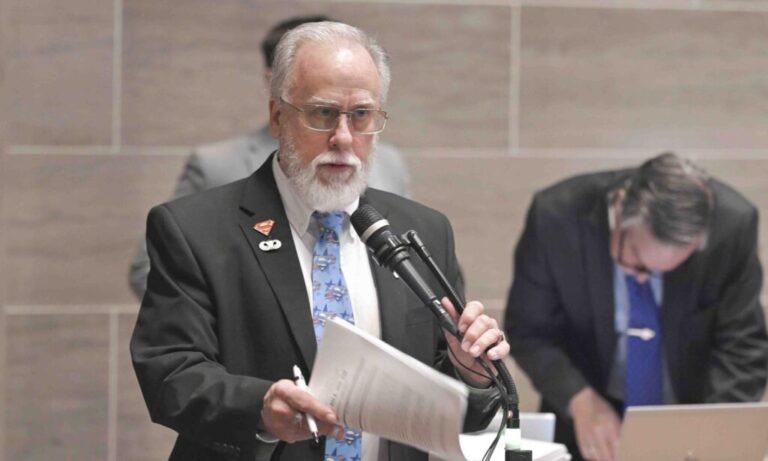
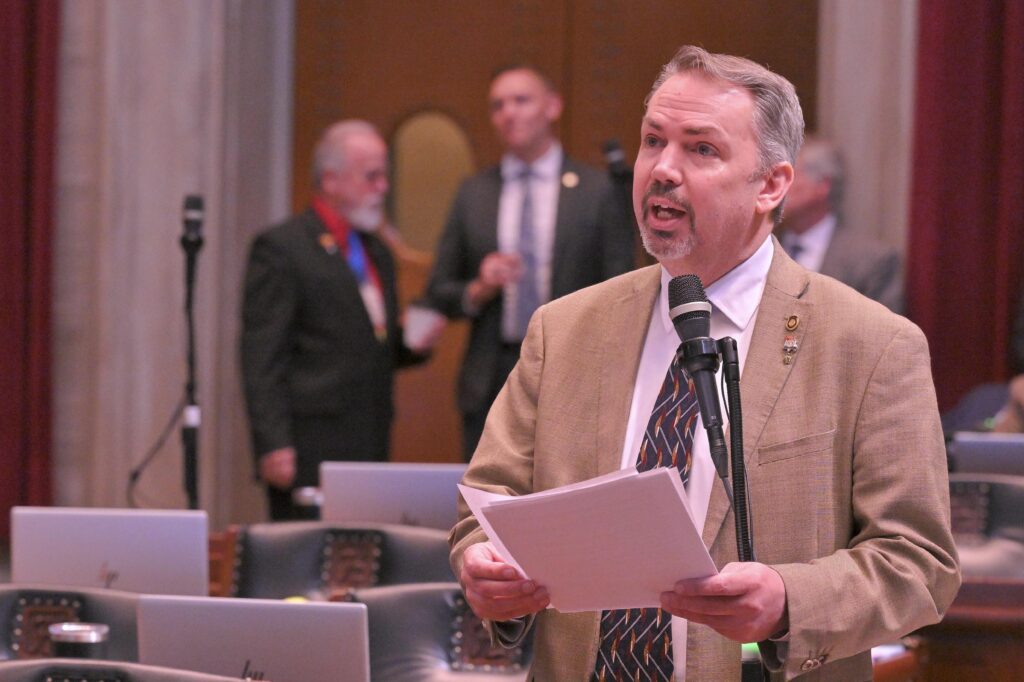
State Rep. Jamie Gragg speaks in the Missouri House this week (Tim Bommel/Missouri House Communications).
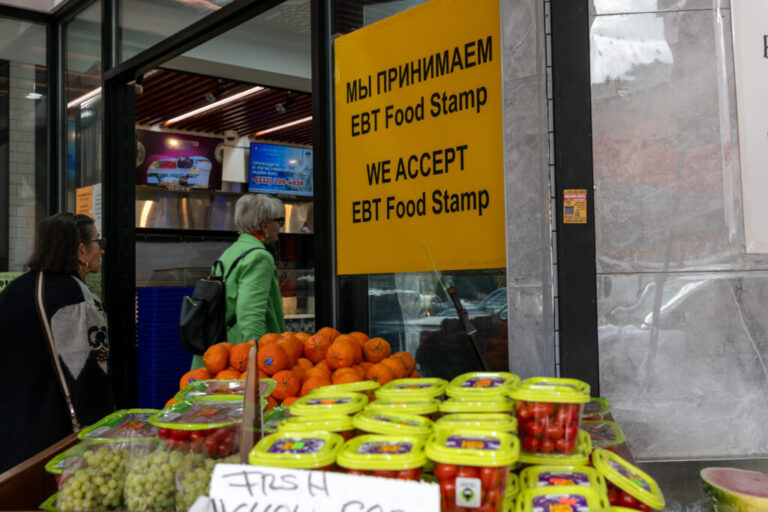
Missouri House Republicans voted Thursday to advance a bill prohibiting thousands of legally present immigrants from receiving federal food assistance, restricting what recipients can buy with those benefits and excluding most refugees and asylees from Medicaid.
Much of the measure, sponsored by Republican state Rep. Jamie Gragg of Ozark, mirrors federal eligibility changes enacted in the One Big Beautiful Bill Act passed by Congress last summer. Missouri has already implemented the food aid changes, and the Medicaid restrictions are set to take effect Oct. 1 under federal law.
The federal law made most refugees, people who have been granted asylum and other humanitarian immigrants ineligible for the Supplemental Nutrition Assistance Program, or SNAP.
People living in the U.S. without legal status were already ineligible for SNAP and Medicaid benefits.
Gragg’s bill would also direct the state social services department to request permission from the U.S. Department of Agriculture to ban highly processed or sugary foods from SNAP purchases. The department applied for the federal waiver in October and received federal approval in December.
The bill passed the House 95-44 on partisan lines.
Gragg told The Independent the bill is designed to align state and federal law and safeguard taxpayer dollars against fraud, which he said is “just human nature.”
“The ultimate goal is to make sure that the services are going to be there for those who need it,” Gragg said.
The bill drew the ire of Democrats, who said it disrespects working-class Missourians and could prevent them from accessing benefits for which they qualify.
Democratic state Rep. Ian Mackey of St. Louis said lawmakers shouldn’t tell low-income Missourians what to eat by banning certain SNAP food purchases.
Mackey recalled living in Boston during Hurricane Sandy in 2012. His local grocery store stayed open when everything else closed.
“It was staffed by people making $8 an hour, probably at a 32-hour-a-week schedule so their employer didn’t have to provide them health care or any other benefits,” Mackey said. “And then, they got nutritional assistance from the government to buy food that they sold me in the middle of a hurricane. Those are the folks you want to punish? That’s the problem? That’s really the problem in our state?”
“When they sell you that birthday cake,” Mackey said, “say thank you and let them have theirs too.”
Republican state Rep. Barry Hovis of Cape Girardeau said there are cases of “fraud, waste and abuse” in SNAP. When he was a police officer in Cape Girardeau, he said, a local convenience store owner was cashing people’s SNAP benefits, keeping half and allowing people to use the other half to buy alcohol and cigarettes, stealing $800,000 over several years.
“I support people that do not have the money to be able to live on for their family and their children,” Hovis said. “We’re not talking about those people.”
Before closing debate on his bill, Gragg, who said his family used SNAP when he was growing up, said recipients could still have birthday cake.
“We’re telling people they can buy flour,” Gragg said. “They can buy eggs. They can buy milk. They can buy the chocolate powder that goes in it. They can make cake.”
The bill would also exclude most refugees and asylees from Medicaid. In order to become eligible for coverage, they would need to hold a green card for at least five years.
Democratic state Rep. Keri Ingle of Lee’s Summit told The Independent the bill’s measures misplace blame for fraud by targeting recipients of public assistance. Most Medicaid fraud comes from providers.
Beneficiaries accounted for only 2.5% of fraud convictions by State Medicaid Fraud Control Units in fiscal year 2023, according to a report from the U.S. Department of Health and Human Services. And more than 90% of adults under 65 who are on Medicaid are already working full- or part-time, or not working because of caretaking responsibilities, illness, disability or attending school, according to a 2023 KFF study.
“The vast majority of the people on any kind of supplemental services in the state are working at least one, if not two, jobs,” Ingle said. “They are paying into the system. They are taxpayers, they are constituents and they are Missourians. And we should treat them with more respect than that side of the aisle has shown today.”