When being a U.S. citizen doesn’t guarantee your right to vote

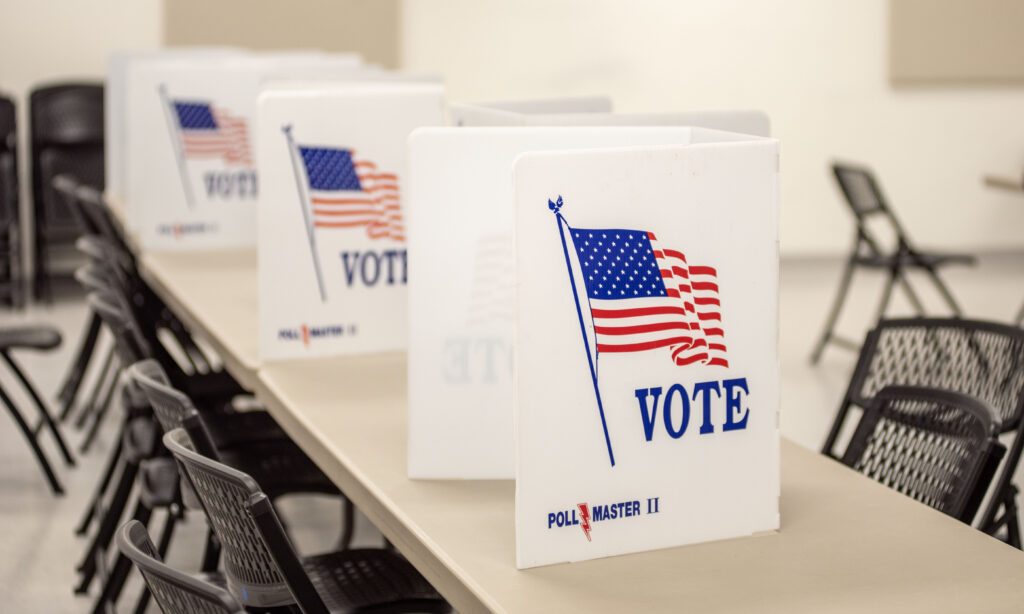
A polling location in Jefferson City (Annelise Hanshaw/Missouri Independent).
Missourians will head to the polls in April for municipal elections, and voters across the country have already begun casting midterm primary ballots. But before November arrives, Congress may decide whether registering to vote becomes harder for millions of eligible Americans.
The SAVE America Act, the top priority of the Trump Administration and currently moving through the Republican-led Congress, seeks to require identification documents above and beyond what is currently required by the National Voters Registration Act of 1993.
Proponents of the new act claim it is necessary to prevent massive voter fraud that occurred in the 2020 presidential election. Evidence and scores of lawsuits have proven no such voter fraud occurred.
If passed, the new legislation would require registration in person with specific photo ID as proof of citizenship.
Required documents would include: “a U.S. passport, a REAL ID driver’s license indicating citizenship, a military ID with service record, a government-issued photo ID showing U.S. birthplace or other government-issued IDs accompanied by certified birth certificates, adoption decrees, or naturalization certificates.”
How would your ability to register or cast a vote be impacted by these specific photo ID requirements?
Examine each requirement carefully that pertains to you and determine whether you would be able to vote.
The SAVE America Act is targeting federal elections, but it will preempt current state voter registration processes. Furthermore, states would be required to put systems in place to collect these documents to verify voter citizenship, which few states currently do.
An analysis of its likely impact shows that millions of voters would have difficulty updating their voter registration even if they use the same ID information and methods — online, mail, DMV, or automatic registration systems — they used in the last election cycle.
For example: having a passport requirement would pose a barrier for millions of current voters; restrictions and requirements for voting by mail would affect millions; and it is estimated that nearly 70 million women voters have last names that do not match their birth certificates due to marriage and the use of hyphenated last names.
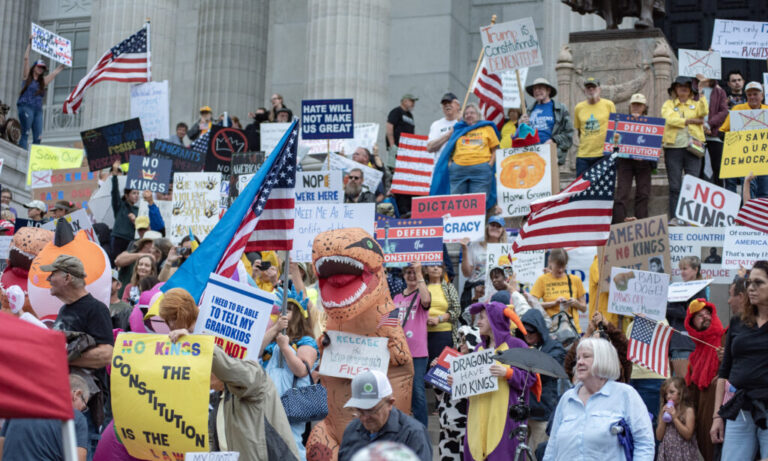
If passed, the SAVE America Act can severely impede, erode, if not destroy, the very foundation on which America sits: the right for citizens to cast a vote in this participatory democratic form of government.
We do not have to look very far to see the erosion of participatory democracy.
Right here in Missouri, we have seen a practice of Republican lawmakers adopting bills and advancing measures that willfully disregard, undo or overturn the vote of the people.
Most notably: A majority of Missourians voted for paid family leave only to have the governor with a stroke of the pen reverse it, denying millions of working families; lawmakers have placed an amendment on the election ballot, to be voted on November 3, 2026, seeking to undermine the citizen initiative petition process; and the ballot measure that approved abortion access continues to face legislative efforts to overturn it.
The new gerrymandered Congressional districts are perhaps the most brazen attempt to marginalize participation of large segments of Missouri voters with distorted and illogical Congressional district boundaries — all in an effort to manipulate the outcome of the mid-term election.
Will there ever be a time when we can be assured that as citizens of the United States our right to vote is secure?
Historically, the fight to gain and exercise the right to vote was waged by women and Blacks. For Blacks it seems interminable. Efforts at the state and federal level have always been afoot to deny, prevent, and make it difficult, if not impossible, for Blacks to vote.
But the fight to retain the right to cast a vote will be all of ours if the Trump administration and the Republican-led Congress and many state legislatures have their way.
What can we do?
To begin, determine if and how your current voting process will change and how difficult it will become for you to cast a vote.
Some questions to ask yourself:
– What options do you have, and how convenient are they, to cast your vote?
– What photo ID proof must you have?
A majority of states are adopting extreme measures to restrict legitimate voter participation in their government.
Do you know what changes in the voting process have already been adopted by your state?
It is more important than ever that we remain vigilant about what is happening that could impede our right to cast a vote, and be willing to take action if necessary. The impact of our ability to continue to exercise that right goes beyond Missouri.
Whether we are able to continue to vote in Missouri will directly determine the impact our voice and influence will have in Washington.
In this unstable and unpredictable state of the current political environment in which we find ourselves, we cannot afford to leave our ability to vote to chance — or to those who no longer believe in participatory democratic form of government.