Missouri Senate weighs ending statute of limitations for childhood sexual abuse

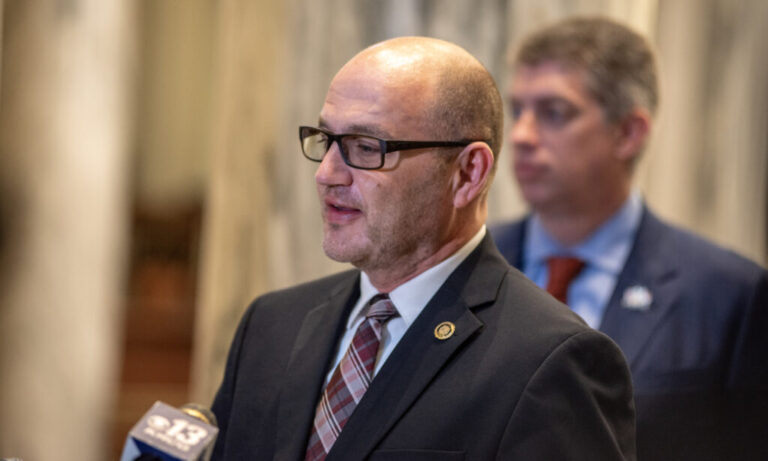
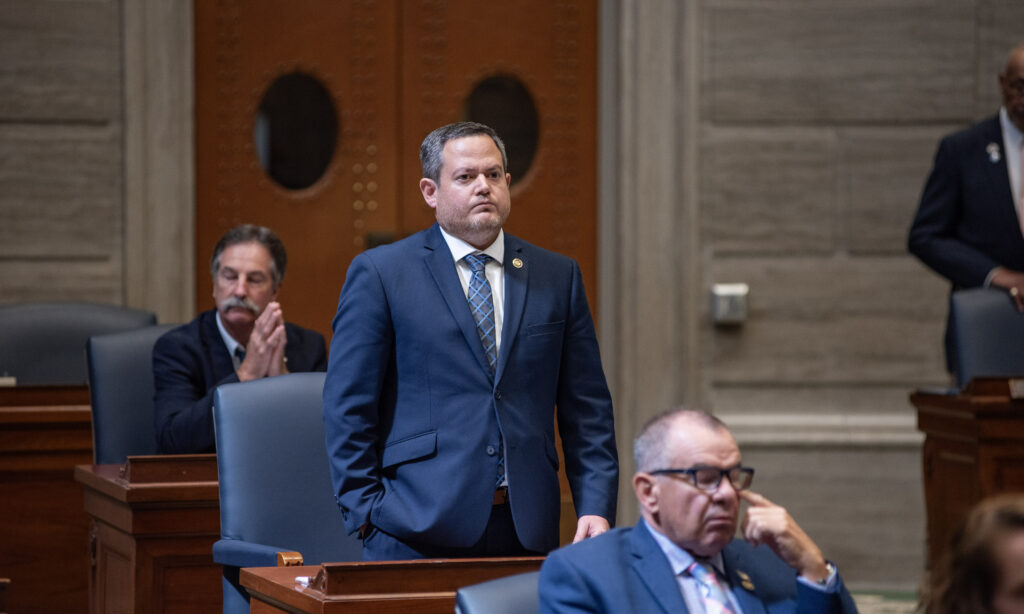
State Sen. Brad Hudson, a Cape Fair Republican, presents a bill during the 2025 legislative session (Annelise Hanshaw/Missouri Independent).
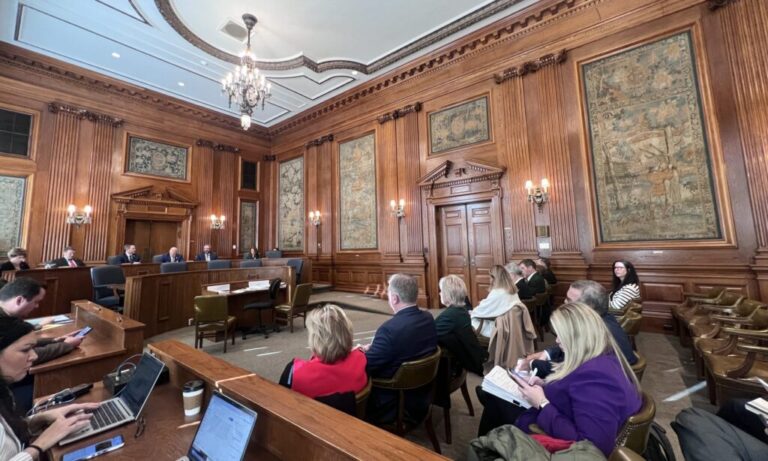
Victims of childhood sexual abuse fought for legislation to eliminate the statute of limitations in a Missouri Senate hearing Wednesday.
One bill would remove any time limit on when civil claims could be brought for crimes involving child sexual abuse, and another would ask voters to change the constitution those changes to be enacted retrospectively.
There is currently no statute of limitations for criminal charges, and the bills heard Wednesday would affect only civil claims.
The bill sponsor, Sen. Brad Hudson, a Republican Cape Fair, said under current law, the statute of limitations is too short, and victims often delay disclosing their abuse until later in life.
Gracia Macks, a victim of childhood sexual abuse, testified in support of the bills. She said many victims are unable to pursue civil accountability, adding, “Missouri’s clock runs out before the survivors are even able to speak.”
“Under current Missouri law, the courthouse door doesn’t close because the abuse didn’t happen,” Macks said. “It closes because the survivor didn’t heal on a legislative timeline.”
Hudson said he believes the current laws side with abusers, noting that the statute of limitations is a weapon used by predators to get away with abuse.
“By assigning an arbitrary statute of limitations for child sexual abuse, we are siding with abusers and perpetrators over survivors, and making Missouri a sanctuary state for pedophiles,” Hudson said.
Hampton Williams testified against the bills as a representative of the Missouri Insurance Coalition. While stating he is in full support of the victims, Williams said he’s concerned civil claims will become a substitute for criminal prosecutions.
“Removing the temporal limits in civil law changes its character, shifting it from a compensatory framework toward one that resembles criminal adjudication, without the structural features designed to ensure accurate and reliable outcomes over long periods of time,” Williams said.
Kathryn Robb, national director of the Children’s Justice Campaign at Enough Abuse, an advocacy organization fighting child abuse, testified in support of the bills. She said victims need the option for a civil claim due to the shortcomings of the criminal justice system.
“Less than 10% of sexual crimes against children go forward to prosecution,” Robb said. “The victim has very little voice; they’re just a witness, they’re not a party. It’s a system that does not work in terms of dealing with this social problem.”
Williams also brought concerns over possible spillover of liability from abusers to organizations simply associated with the abuser, such as employers, schools and other organizations the abuser may be affiliated with.
Robb responded, “Institutions don’t go to jail.”
Robb’s views echoed the sentiments of the other 12 witnesses testifying in support, many themselves survivors of childhood sexual abuse.
“Why should perpetrators and wrongdoing institutions be protected by the passage of time?” Robb asked. “When victims and their families suffer in perpetuity.”
This story originally appeared in the Columbia Missourian. It can be republished in print or online.