Factual lessons about Black history can help close many divides

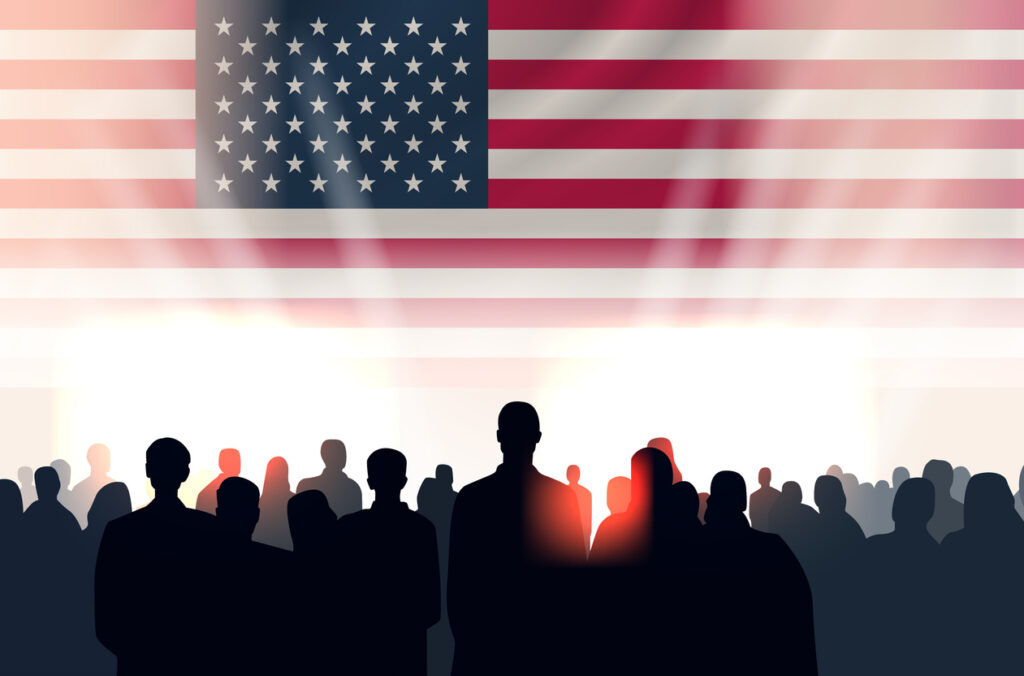
Black History Month would be a good time to revisit the representation of Blacks at every level of government (gmast3r/iStock Images).
February has been set aside as Black History Month. It presents an educational opportunity that can assist in closing many divides between Blacks and whites.
Designating February as Black History Month is the nation’s attempt to correct its lack of acknowledgement of the contributions of Black Americans in the normal annals of America’s history.
While it is a good remedial effort, the month-long recognition is not enough.
The best solution will occur only when it will no longer be necessary to set aside a month to note the significant achievements of a particular race or ethnic group.
When new editions of books will have been rewritten to reflect accurate historical accounts of the contributions of Black Americans in the arts, sciences, politics, business and every subject areas, just like other Americans.
But until that time, all of us should continue to do what we can to set the record straight, and foster the kind of dialogue that will further enlighten ourselves and, more importantly, our children.
This is more important today than ever as efforts are being made to distort, erase and revise the role of Blacks in American history. There are many areas where enlightenment is needed as we try to better understand those contributions and each other.
Too often, rather that explore some of those areas — many of them forbidding and disconcerting — we are far more comfortable allowing a label or stereotypical view to be the prism through which we see each other.
Even worse, we tend to apply those views to an entire race of people.
This is an election year. Revisiting Black history when it comes to our two-party system of government could prove to be enlightening, debunk some common misperceptions, inform and encourage the formation of more effective plans and coalitions to bring about meaningful changes in the political landscape moving forward.
Take the prevalent view that most Blacks are more liberal than conservative and therefore are, or should, belong to the Democratic Party rather than the Republican Party. Recent analysis shows that such labeling is not only misleading but is incorrect.
Revisiting Black participation in the political process since emancipation is instructive. For example, following the Civil War and during Reconstruction, Blacks were very active in Republican Party politics and served in almost every level of government.
For more than a decade during Reconstruction, Blacks held offices from the United States Congress — there were two senators and fourteen representatives — to state legislatures, city councils and county commissions. Blacks held more offices in the Deep South than anywhere else.
Much of the political advances for Blacks were a direct result of the Abolitionist Movement lead by Frederick Douglass, who remained a staunch Republican all of his life. Douglass, described as an indefatigable journalist, and influential orator in great demand, held a number of positions in the national government.
Since 1870 to 2026, only twelve Blacks have been elected as US senators: four Republicans, eight Democrats. Blacks have also had held positions in the US Congress since 1870, representing both parties.
A historical discussion is certainly worth having by civic-minded Blacks and whites interested in making a two-party system work better, again, for all groups.
More importantly, such a discussion could go a long way to dispel some myths that are at a minimum negatively compromising, if not downright regressive still in how Blacks regard government and the political process.
On the individual level, there is a prevalent belief that most Blacks believe in big government programs rather than economic self-sufficiency, that Blacks prefer welfare than a meaningful wage-earning job.
On the organizational level, there is the belief that the Democratic Party is more inclusive, empathetic and supportive of the needs and interests of Blacks than the Republican Party. That may be true in recent history, but not when you look at the total history of both parties.
No doubt those two notions could stir heated debate in many circles.
The greatest realization of all would be for more Blacks and whites to recognize the importance of participating in a significant way in both parties to have an avenue to impact those issues that are important to them on an ongoing basis.
Recent data about changes in party affiliation indicate a trend toward that realization.
With so much riding on how we resolve the many challenges facing America today, today, neither party should feel comfortable taking a large voting constituency for granted or totally ignoring them until election time.
No matter what party is in power at the state or federal levels of government, Blacks, and other ethnic groups, could have significant power in determining the number of seats at the legislative tables that will be representing their interests.
Black History Month would be a good time to revisit the representation of Blacks at every level of government, from the Civil War to today. Taking time to really understand what forces — good and bad — have led to where we are today.
More importantly, what rich opportunities are waiting to be tapped.
Could the past be prologue?
Providing lessons and reminders about the political power that resides in each of us as individuals, and the unstoppable power together, if we are willing to fight to keep it, step up and use it.
Black history is a part of American history. All of our history — past, present and future.