
Missouri’s insurance rules reward denial, not care

In a 2024 AMA survey, 94% of physicians said insurance pre-approvals, often called prior authorizations, delay treatment and 29% said it led to serious adverse events such as hospitalization or permanent disability (Getty Images).
In January 2026, proposed health insurance marketplace premiums in Missouri are among the steepest since about 2018, with some Kansas City–area filings seeking increases of up to 40%.
But paying more won’t mean getting more.
In Missouri, insurance doesn’t guarantee access. It often guarantees delays, denials and avoidable harm. Behind those higher costs are insurer rules that reach beyond billing and into clinical decisions once left to physicians.
Insurers argue these rules control costs in a system where waste is a legitimate concern. But in practice, they’ve become barriers that delay treatment, increase administrative spending and force patients through unnecessary tests.
In a 2024 AMA survey, 94% of physicians said insurance pre-approvals, often called prior authorizations, delay treatment and 29% said it led to serious adverse events such as hospitalization or permanent disability.
Linda Quach, a former ICU nurse in Missouri, saw firsthand how insurer rules endangered patients.
“One incident that still haunts me today was when my patient needed an urgent MRI, but his insurance wouldn’t approve it unless we did a CT scan first,” she told me in a recent interview. “Our physicians said the CT wouldn’t be helpful, but we had no choice. The stress of transport caused his vitals to crash, and by the time we got back upstairs we had to code him. It was my first code, and it left me traumatized.”
Many hospitals already run overbooked CT and MRI machines, with inpatient and outpatient imaging sharing the same limited equipment and staff. Outpatients often wait weeks between scheduling and receiving a scan, and urgent inpatient cases can displace their test at the last minute.
When insurers require unnecessary procedures, they don’t just delay care for one patient. They limit access for others already waiting.
In stroke care, timing is critical. Clot-busting drugs like tPA and TNK must be given within 3 to 4.5 hours of symptom onset, and only after imaging confirms the stroke is not caused by bleeding. When machines are tied up by avoidable imaging, it can delay diagnosis for patients whose outcomes depend on speed. Insurer rules that require sequential tests are intended to control costs, but they can worsen system-wide delays when they override medical judgment.
For many Missourians, those rules extend far beyond imaging. When insurers update or restrict their drug formularies, patients can lose coverage for medications that were already working. A 2024 Missouri Foundation for Health survey found that one in three Missourians skipped or rationed prescriptions because of cost, and more than half delayed or went without other care.
Doctors are often required to follow “step therapy” policies — sometimes called fail-first rules — forcing patients to try cheaper alternatives before an insurer will approve the drug their physician originally prescribed.
Unsafe staffing is the quiet emergency in Missouri hospitals
Prior authorization can also limit which doctors or specialists patients can see, or which treatments are covered, depending on the plan’s network and review process. In practice, medical decisions often hinge less on a clinician’s judgment and more on what the insurer is willing to cover that month.
Nationally, private insurers deny nearly one in five in-network claims. Investigations show some denials are issued with little or no physician review. Insurers defend these policies as safeguards against unnecessary care, yet investigations continue to show that these barriers delay or deny medically necessary treatment across the health system.
In Missouri, as in most states, many people with private insurance are covered by self-funded employer plans regulated under federal rather than state law. A federal statute called the Employee Retirement Income Security Act, or ERISA, exempts these plans from most state oversight.
ERISA’s preemption clause was originally designed to enable national uniformity in employer-based benefits, rather than shield insurers from accountability, and today it constrains states’ ability to act when those plans deny care. In the Supreme Court’s 2004 Aetna v. Davila decision, which ruled that patients harmed by coverage denials under ERISA-regulated employer plans can’t seek damages under state law, limiting accountability for insurer decisions.
That regulatory gap became painfully clear when Anthem ended its contract with University of Missouri Health Care on April 1, 2025, putting about 90,000 Missourians out of network. For more than three months, many insured Missourians faced canceled appointments, limited access to their regular providers, or out-of-network costs they could not afford, without knowing when or if coverage would return. A new agreement was reached in July and applied retroactively, but the disruption showed how vulnerable patients are when insurers control access without accountability.
For thousands of Missourians, insurance itself became a barrier to care, forcing many to choose between paying out of pocket or delaying treatment.
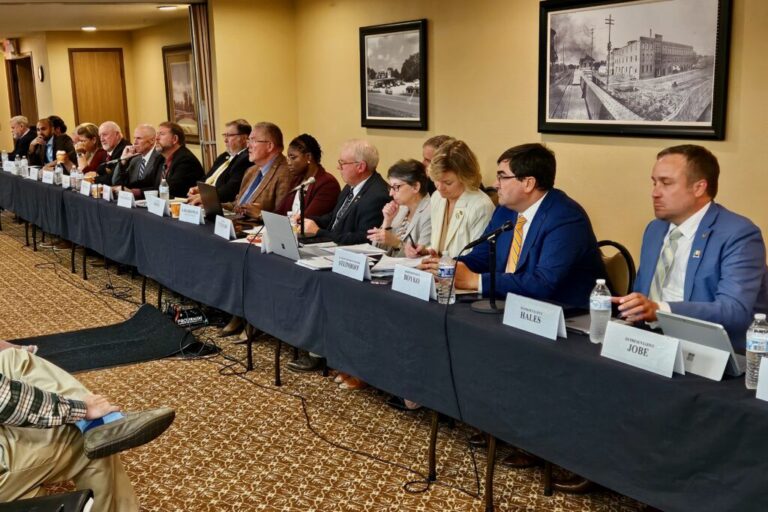
The MU-Anthem dispute exposed what happens when insurers operate with little state oversight. In legislative hearings that followed, Director Angela Nelson of the Missouri Department of Commerce and Insurance testified that her agency has “no real authority” over many commercial insurance products — leaving Missourians with little recourse when coverage fails and regulators unable to act even when patterns of delay or denial emerge.
The Missouri Department of Commerce and Insurance conducts market conduct examinations and reviews rate filings, many of which are made public through SERFF. But unlike some states, Missouri does not routinely publish detailed market conduct examination reports beyond settlement summaries.
Consumers can see proposed rates, but they rarely have access to the specific findings from these examinations or to the corrective actions regulators require of insurers, when regulators identified violations or required corrective action.
Missourians are expected to shoulder rising costs without meaningful public accountability.
As reimbursement stagnates and insurers retain more of each premium dollar, hospitals absorb growing losses through uncompensated care — the combined cost of charity care and unpaid bills. In 2023, Missouri hospitals absorbed more than $1 billion in uncompensated care, according to the Missouri Hospital Association.
The Affordable Care Act’s Medical Loss Ratio rule requires insurers to refund excess premiums when they spend too little on patient care and quality improvement. Those rebates make the flow of money visible, showing how insurer margins can expand even as hospitals operate at a loss. Missouri has no framework to tie those rebates to patient access or workforce stability, particularly for ERISA-exempt employer plans that fall outside state oversight.
The cost of inaction is clear to Quach, the ICU nurse: “Unsafe staffing ratios. Administrators who prioritize budget over lives. The emotional whiplash of being both essential and expendable.”
Premiums are rising even as many Missourians already can’t afford healthcare. Insurers are rebating millions while hospitals absorb tens or hundreds of millions in unpaid and unreimbursed care. Rural hospitals are closing, safety-net facilities are shrinking, and patients are left with nowhere to go. Insurer accountability should be as visible as hospital transparency.
The state can’t keep calling that efficiency.