Why I’m standing behind the $7.25 billion Roundup settlement

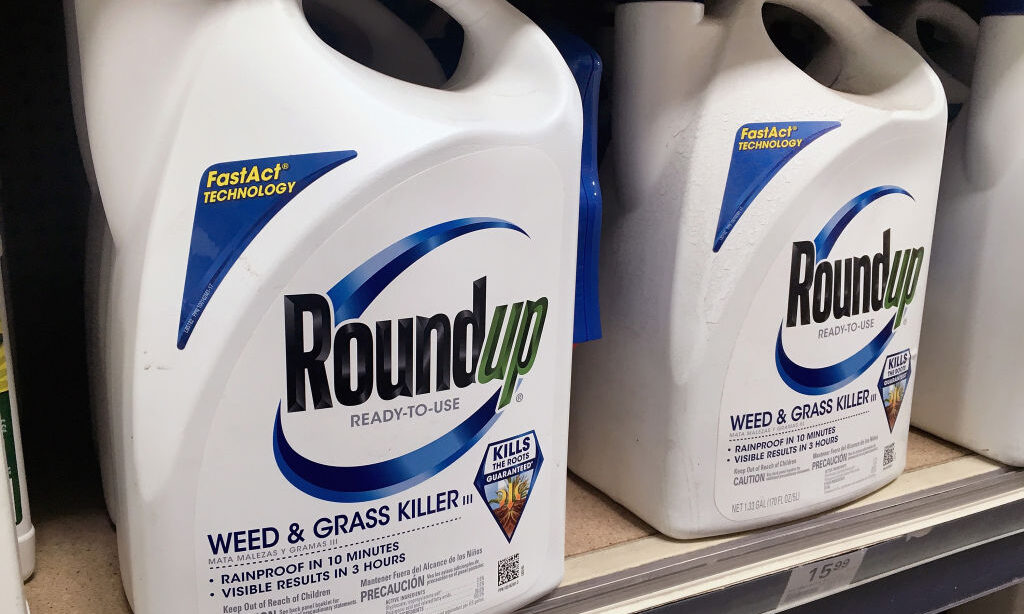
Roundup weed killing products are offered for sale at a home improvement store on May 14, 2019 in Chicago, Illinois (Scott Olson/Getty Images).
I was diagnosed with non‑Hodgkin’s lymphoma in 2019, and ever since, I’ve lived with the understanding that my cancer is permanent and my future uncertain. After ruling out other causes and reviewing my decades of Roundup use, my medical team concluded that repeated exposure to herbicides was very likely the cause of my non-Hodgkin lymphoma.
I’m grateful for the proposed $7.25 billion Roundup settlement because it offers a secure, real path to compensation for me and my family.
Living as a ticking time bomb
My diagnosis came out of nowhere. I was on a cruise with my wife when I opened my lab results online and saw a note advising me to see an oncologist. There is no good reason to be referred toan oncologist.
This disease will likely shorten my life, and it has unquestionably shrunk it. Every new set of lab results is another spin of the chamber. On good days, the numbers stay the same, and I feel like I’vedodged another bullet. On bad days, the weight of it is crushing—for me and for my family, who live with the same fear, just without the charts and test results to distract them.
For 30 years in Scottsdale, Arizona, I’ve taken care of our home — our pool, odds and ends around the house and our yard. Like many homeowners, I trusted what was on the shelves at places like Costco and Home Depot. Roundup was everywhere, marketed as a convenient solution for killing weeds. I sprayed it for decades without thinking twice.
I have no family history of this kind of cancer. When I asked my doctors what could have caused it, they told me that exposure to certain chemicals is a likely culprit. When I specifically asked about Roundup, they said there was a very, very high probability that my cancer was caused by that exposure, and that they were seeing similar patterns across the country.
I am not a scientist, but I do know that when you use a product exactly the way you’re told, for years, and are later told that exposure to that product likely caused your cancer, someone should be held accountable.
Why this settlement needs to happen
Monsanto’s proposed $7.25 billion class settlement would establish a long-term compensation program for people exposed to Roundup who developed non‑Hodgkin lymphoma, including those who may be diagnosed in the years ahead. The agreement was filed in state court in St. Louis, Missouri, where most Roundup cases are pending. St. Louis Circuit Judge Timothy Boyer, who has presided over several cases alleging that Roundup causes cancer, will decide whether to approve the settlement.
This settlement agreement matters because the U.S. Supreme Court has agreed to hear a case that could wipe out the legal claims of people like me altogether on the theory that because the EPA didn’t require a cancer warning on the label, Monsanto shouldn’t have to either. If Monsanto wins, people who got cancer from their product could be left holding an empty bag.
The reality is that litigation is unpredictable. Trials take years. Appeals can take even longer. And while big companies can afford to roll the dice repeatedly, sick people cannot. We don’t have unlimited time, unlimited energy, or unlimited savings.
This proposed settlement offers a way forward without requiring every single person to wait for years until they get their turn to roll the dice at trial. It also protects people who get diagnosed years from now, so they aren’t left out in the cold.
What this means for my family
Due to my cancer diagnosis my immune system is permanently compromised, and my world has gotten a lot smaller. I gave up season tickets to the symphony because I cannot safely sit in a 4,000‑seat hall anymore. I avoid crowds. Cold and flu season is now a real concern for me.
The compensation from this settlement won’t cure me or give me back the retirement my wife and I planned. The best I’m ever going to be with this cancer is right now. But this money can help pay for the care I’ll need going forward, and that matters. For me, my wife, and my family, this settlement is a no-brainer, and I urge other plaintiffs in this litigation and the court to support it.