Missouri Republicans move to change venue for major court cases following recent abortion rulings

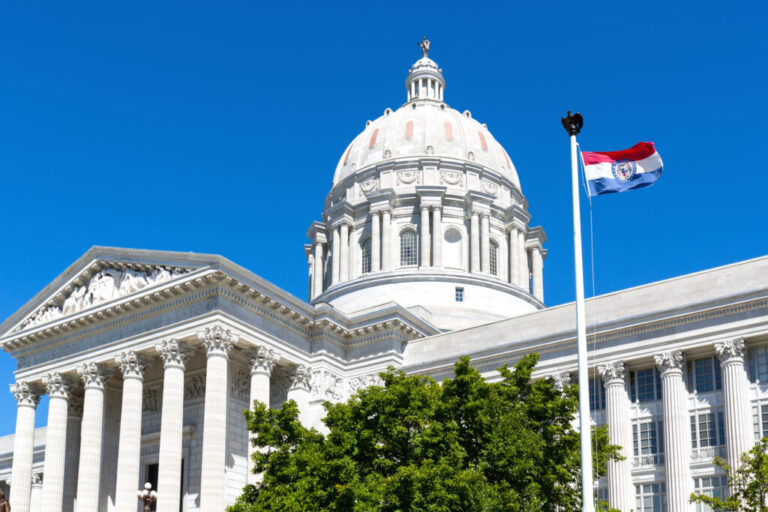
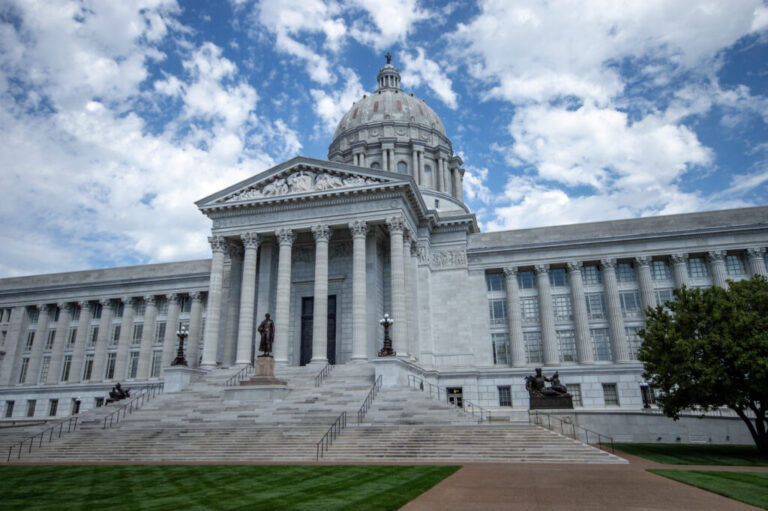
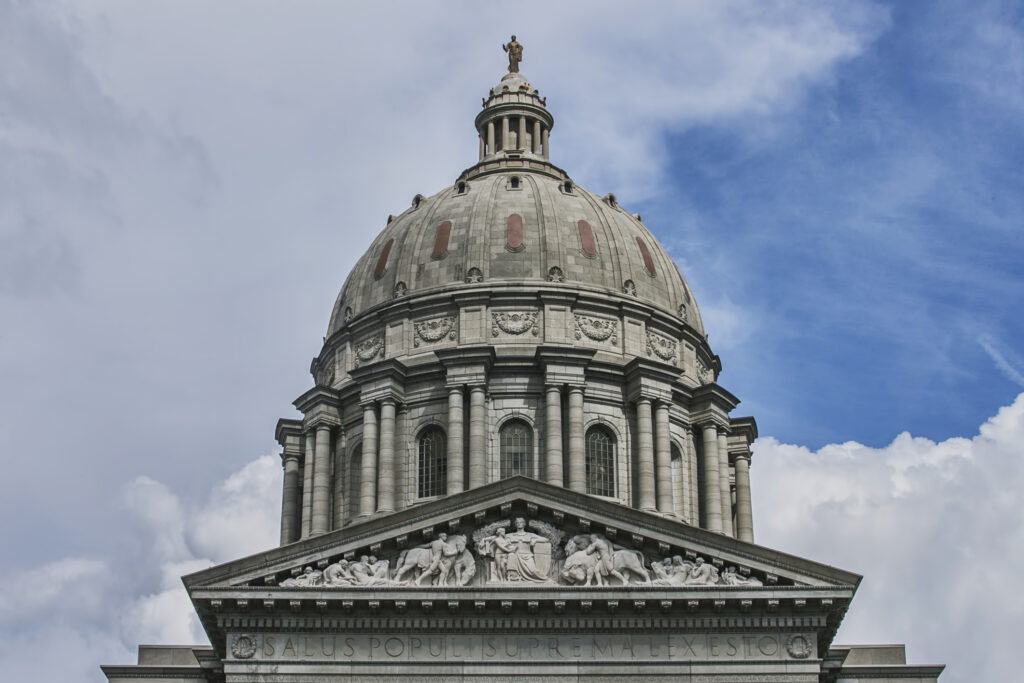
The Missouri Capitol Building in Jefferson City (Getty Images).
Missouri Republicans are pushing a change that would move most high-profile legal fights — including ballot initiative challenges — out of the Western District Court of Appeals and into the Eastern District.
They are also hoping to block any challenges to state law or the constitution from being filed outside of Cole County.
While framed as a matter of judicial efficiency, the move comes after years of frustration among Republicans and anti-abortion advocates with decisions from the Western District, raising questions about whether the bill is aimed less at caseloads than at outcomes.
“In our experience with the Western district, we think they’ve been unfair, we think they’ve been biased, and there are a lot of people who agree with us on that,” said Sam Lee, a lobbyist with Campaign Life Missouri. “Not just on the issue of abortion, but on other issues as well.”
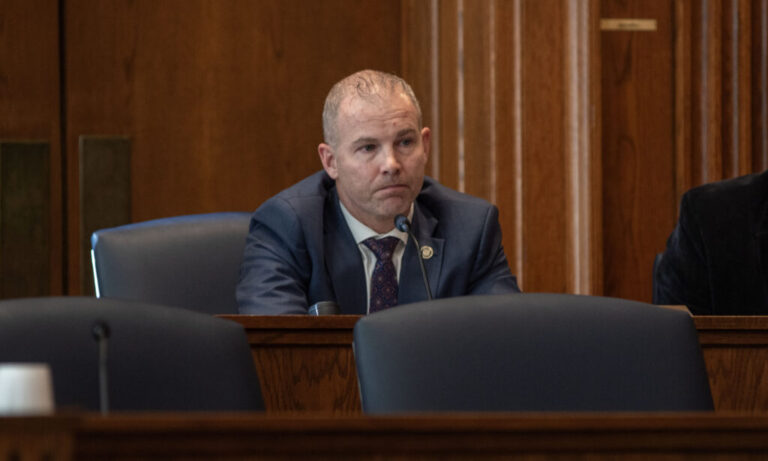
The legislation, filed by state Sen. Rick Brattin, a Republican from Harrisonville, would mandate that any lawsuits challenging the validity of a Missouri statute, regulation or provision of the constitution be tried in Cole County.
“The eastern (district) is more robust,” Brattin told the Senate General Laws Committee during a hearing last month. “There’s more judges. There’s more solicitors general.”
The Eastern District Court of Appeals has 13 judges and handles about half of Missouri’s appellate caseload. The Western District, which includes Cole County, has 11 judges and hears about 40% of appeals. The remaining share falls to the Southern District.
Dave Roland, a senior legal advisor for the Freedom Center of Missouri, said the bill is strange, but that moving Cole County to a different venue “is not a crazy idea.”
“The real question is ‘why?’” he said, noting that most challenges to the validity of a state law would skip the appellate court and go directly to the Missouri Supreme Court anyway.
The answer appears to be frustration with a series of Western District rulings in recent years tied to abortion and abortion-related ballot measures.
In 2023, the Western District Court of Appeals ruled that then-Secretary of State Jay Ashcroft’s ballot titles for proposed abortion rights amendments were “replete with politically partisan language.”
Last fall, the court rejected a request by the attorney general’s office to reinstate several restrictions on abortion. In December, it rewrote the ballot language for a proposed constitutional amendment reinstating Missouri’s abortion ban.
Missouri’s abortion rights trial concludes, but a decision is still months away
Lee, who testified in support of the legislation, told The Independent that the ongoing battles over abortion in Missouri were at the heart of his involvement with Brattin’s bill.
While judges emphasize their nonpartisan role, the makeup of the courts is often viewed through a political lens. In the Western District, seven judges were appointed by Democratic governors and four by Republicans. The Eastern District has a narrower split, with seven judges appointed by Republicans and six by Democrats.
Who knows if the eastern district would’ve reached different conclusions in the ballot initiative cases, Lee said, but in his decades as an anti-abortion lobbyist, the courts largely weren’t on his radar. But now, he said, the anti-abortion movement is watching more closely.
Susan Klein, with Missouri Right to Life, was the only other person to testify in support of Brattin’s bill.
She and Lee praised the proposal for promoting “common sense government efficiency,” opening up a greater variety of judges to take on the caseload.
Lee mentioned that Cole County is slightly closer to St. Louis than Kansas City, and the Missouri Attorney General’s Office has a regional office that operates out of the same building as the Eastern District Court of Appeals.
In Kansas City they are two blocks away from the courthouse.
A 10-day-long trial challenging the constitutionality of Missouri’s various abortion regulations just finished in Kansas City. Under Brattin’s legislation, that case would have taken place in Cole County.
The Missouri Attorney General’s Office tried and failed to move the abortion case from Jackson County, where judges are appointed through a nonpartisan process, to Cole County, where judges run in partisan elections.
Roland said that switching any cases involving the state statutes to Cole County would likely create additional barriers to citizens bringing lawsuits.
“If the burden of travel needs to fall on anyone,” Roland said, “it makes more sense for it to fall on state officials than on ordinary citizens.”
Chuck Hatfield, a longtime Jefferson City attorney who has been involved in numerous constitutional cases in Missouri, said the bill would move a huge amount of workload to the eastern district, including about 25,000 pending lawsuits against Monsanto over cancer allegations.
He also worried about the loss of institutional knowledge that would come with moving cases away from judges in the Western District with experience handling constitutional cases. It could take years, he said, for the Eastern District to build up that level of expertise.
“I don’t think that would be worth it to fix a caseload issue, and I don’t see an ideological difference between the courts,” he said. “… If they are trying to shift Cole County because they don’t like the decisions out of the Western District, that’s a terrible reason to make the shift, and a very cynical reason. Hopefully they’ve got better reasons than that.”
The bill passed through the Senate General Laws committee on Wednesday on a party-line vote.