Government-imposed scarcity is the wrong energy policy for Missouri

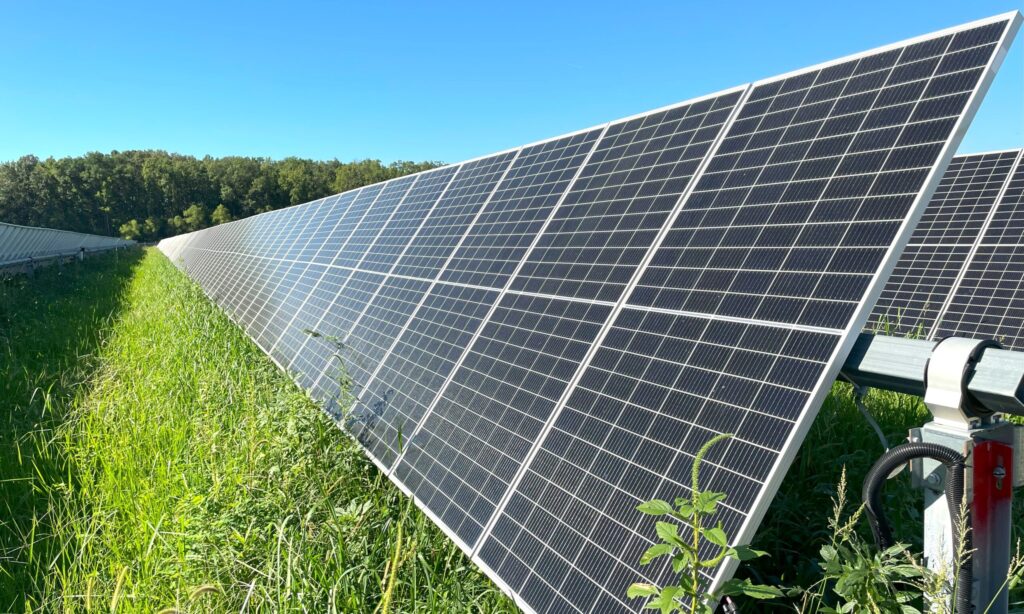
More than $1.1 billion has been invested in Missouri solar, generating $3.7 million in state and local tax revenue that supports schools, public safety and infrastructure (Robert Zullo/States Newsroom).
As Missouri’s legislative session begins, lawmakers face a clear and urgent challenge: rising electricity costs, growing demand and the responsibility to ensure reliable, affordable power for Missouri families and businesses.
Meeting that challenge will require discipline, market-driven solutions and a firm commitment to policies that strengthen, not restrict, the state’s energy supply.
Missouri consumes far more electricity than it produces. As demand increases from advanced manufacturing, agricultural processing and new technologies, and as older power plants retire, expanding in-state generation is no longer optional. It is essential to maintaining economic competitiveness and grid reliability.
That is why proposals to impose moratoriums on utility-scale solar are deeply misguided. A moratorium does not stop demand, it limits supply. When government restricts supply, prices rise. Blocking the lowest-cost and fastest-to-build source of new generation forces Missouri to rely more heavily on expensive, out-of-state power and volatile wholesale markets, directly increasing electricity costs for ratepayers.
The consequences extend well beyond utility bills.
Companies considering investments in Missouri look closely at energy availability and price stability. Advanced manufacturers and agricultural processors cannot expand, or even operate, without dependable, affordable electricity. Artificially constraining generation through a solar moratorium creates an energy shortage by government decree, putting Missouri at a competitive disadvantage to neighboring states that are expanding supply and welcoming investment.
Solar development has already proven its value in Missouri. More than $1.1 billion has been invested, generating $3.7 million in state and local tax revenue that supports schools, public safety and infrastructure, without raising taxes. In rural communities, these projects provide stable, long-term revenue at a time when family farms face increasing economic pressure.
Equally important, solar respects private property rights. Farmers and landowners who voluntarily choose to host projects are exercising their right to use their land productively, strengthen their operations, and diversify income. A blanket moratorium replaces individual choice with government control, undermining the principles of property rights and free enterprise that Missouri conservatives have long defended.
Solar energy is not a government mandate or a political statement; it is a practical tool. It is affordable, reliable, and can be brought online quickly to meet rising demand. Expanding solar strengthens grid resilience, keeps energy dollars in Missouri and reduces dependence on outside suppliers.
Missouri’s success has always been driven by innovation, private investment and respect for property rights, not by government-imposed scarcity. As lawmakers consider the state’s energy future, they should reject moratoriums and embrace market-based solutions that lower costs, protect landowner rights, and ensure Missouri has the power it needs to grow.